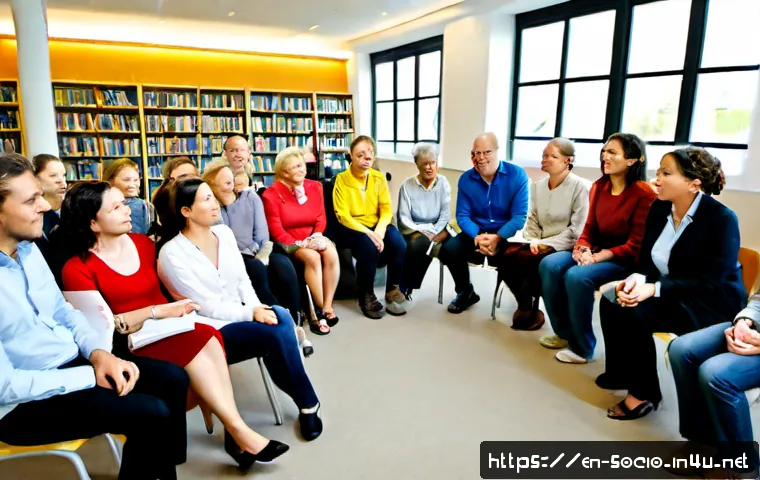
Feminist ideas shape social change when they influence institutions, cultural norms, and collective decisions—not only personal beliefs. Change may appear in public policy, schools, workplaces, media, and grassroots networks, but priorities and results differ by community.

For organizations, the useful question is not whether to “support equality” in general, but which barrier they are trying to address. A focused workplace inclusion program, educational resource, or community partnership can be more useful than a broad statement with no follow-through.
Outside training or equity consulting may be worth considering when internal teams lack trust, relevant experience, or a clear evaluation process. Meaningful progress requires feedback from affected people, realistic measures, and a willingness to revise the approach.
At a Glance
- Feminist advocacy can create change through policy, education, workplace practices, culture, and grassroots organizing.
- The most suitable approach depends on the specific barrier, the people affected, and the institution’s ability to act.
- Strong initiatives use both measurable indicators and direct feedback instead of relying on public promises alone.
| Path to Change | Main Goal | Typical Resources | How to Review Progress | When Outside Support May Help |
|---|---|---|---|---|
| Policy and legal reform | Change formal rules and protections | Research, coalition work, public engagement | Implementation review, access feedback, policy outcomes | When specialized policy or legal context is needed |
| Education and cultural representation | Expand knowledge and challenge stereotypes | Curriculum, educational tools, media materials | Participation, learner feedback, content review | When materials need accessibility or subject expertise |
| Workplace inclusion | Improve systems, participation, and accountability | Training, policy review, reporting channels | Workforce data and confidential qualitative feedback | When internal trust or facilitation capacity is limited |
| Grassroots action | Build local support and collective influence | Volunteers, partnerships, accessible events | Community participation and ongoing feedback | When local outreach or coalition-building experience is needed |
How Gender-Equality Advocacy Creates Social Change
The short answer: change happens through institutions, culture, and collective action
Feminism includes diverse movements and perspectives that challenge gender-based inequality. Its influence is often practical: changing how an organization makes decisions, how a school handles participation, how media presents people, or how a community organizes support. Individual attitudes matter, but durable social change usually also involves systems, rules, resources, and accountability.
Why progress is rarely linear or identical across communities
A strategy that makes sense in one place may not fit another. Communities have different histories, needs, institutions, and priorities. Gender-related concerns may also intersect with race, disability, class, sexuality, migration status, and religion. It is important to avoid treating one feminist framework or one campaign model as a universal solution.
Separating individual attitudes from structural barriers
An awareness campaign can encourage reflection, but it may not remove a structural barrier by itself. For example, an employer may discuss inclusion while leaving unclear promotion processes or inaccessible reporting channels unchanged. A useful review asks two questions: What do people experience? and What in the system makes that experience more likely?
Comparing the Main Paths to Change
Policy and legal reform
Policy reform focuses on formal rules, public standards, and institutional responsibilities. It can create a shared framework for action, but the existence of a policy does not automatically show how it is applied in daily life. Review both the written policy and the experience of people trying to use it.
Education, media, and cultural representation
Education and representation can make overlooked experiences more visible. Schools, publishers, media teams, and community educators can examine whose perspectives appear in materials, whose voices are missing, and whether content reinforces narrow assumptions. Educational resources should be reviewed for accuracy, accessibility, and relevance to the intended audience.
Workplace inclusion and organizational accountability
Workplace inclusion may involve pay practices, promotion systems, hiring processes, reporting channels, leadership expectations, and inclusion training. Training can be useful when it supports a broader plan. It is weaker when it is treated as a one-time substitute for reviewing systems. Organizations should connect workplace inclusion efforts to clear responsibilities and a way for staff to provide feedback safely.
Grassroots organizing and mutual-support networks
Grassroots action often begins with local knowledge. Community groups may organize outreach, share resources, create mutual-support networks, or build partnerships around a specific concern. These efforts can be especially valuable when formal institutions are not reaching people effectively. Accessibility matters: consider language, meeting format, transport, digital access, caregiving needs, and who is able to participate.
Comparison table: goals, time horizon, costs, and evidence to review
Rather than asking which path is “best,” compare the goal, implementation effort, available resources, and evidence to review. A cultural campaign may be easier to begin than a policy change, while a policy change may have little value without communication and implementation. Costs and effectiveness vary widely, so review the scope of any training provider, consultant, or program tool before selecting it.
From Awareness to Action: Practical Steps and Common Mistakes
Define the specific inequality or access barrier
Start with a plain description of the problem. “Improve inclusion” is broad; “review whether participation opportunities are equally accessible” is more actionable. Define who is affected, where the barrier appears, and which part of the process can realistically be changed.
Include affected people in planning and evaluation
People closest to a problem may identify barriers that leaders do not see. Participation should not mean asking one person to represent an entire group. Use more than one channel for input, and explain how feedback will be considered. If an organization cannot act on a request, it should communicate that honestly rather than collecting feedback without follow-up.
Set measurable, realistic indicators
Institutional change usually requires both quantitative indicators and qualitative feedback. Numbers may show participation patterns or process use, while interviews, comments, and listening sessions can reveal why a system is or is not working. Choose indicators that match the stated goal instead of selecting easy metrics that merely look positive.
Avoid tokenism, vague promises, and unsupported claims
Tokenism can occur when visibility is mistaken for influence. A public statement, a single event, or a symbolic appointment may raise awareness, but it does not prove that decision-making has changed. Avoid claiming that a program will produce the same result in every workplace or community. Context, trust, leadership support, and implementation all require review.

What Different Groups Can Do
Schools and educators: curriculum, safety, and participation
Schools can review learning materials, classroom participation, safety processes, and opportunities for students to raise concerns. An effective approach considers whether students with different experiences can access support and take part meaningfully. Educational tools should be age-appropriate, accessible, and open to review.
Employers: pay practices, promotion systems, reporting channels, and training
Employers can examine how decisions are made, communicated, and reviewed. Useful starting points include promotion criteria, access to opportunities, reporting channels, and the practical role of managers. Inclusion training is more credible when employees understand its purpose, when policies support it, and when leaders are accountable for next steps.
Community groups: outreach, partnerships, and accessible events
Community organizations can work with local partners rather than assuming they already understand every need. Outreach should reach beyond the easiest-to-contact participants. Partnerships with trusted groups may improve relevance, especially when initiatives involve intersecting concerns related to disability, migration status, religion, class, or sexuality.
Individuals: informed participation without speaking over affected communities
Individuals can learn, listen, share reliable resources, and support community-led efforts. A practical standard is to contribute without taking control of conversations that belong to people directly affected by the issue. Ask what support is useful before assuming that visibility or advocacy is the right next step.
Selection Criteria and Comparison Summary
Before choosing a workplace inclusion training program, equity consultant, facilitation service, or educational resource, check these points:
- Problem fit: Does the service address the specific barrier you identified?
- Scope: Is it a single session, a policy review, facilitated planning, or an ongoing support process?
- Accessibility: Can intended participants engage with the format, language, materials, and feedback process?
- Accountability: Does the provider explain how learning, participation, and follow-up can be evaluated?
- Community relevance: Does the approach allow for local context rather than offering a one-size-fits-all template?
Internal resources may be enough when a team has relevant knowledge, trust, time, and a clear way to gather feedback. Consider external training, facilitation, or equity consulting when the issue is sensitive, internal relationships limit honest discussion, or the organization needs a more structured review. Check the provider’s official information and detailed service conditions before making a selection.
Looking Beyond a Single Movement or Campaign
Intersectional perspectives and competing priorities
Gender equality efforts are stronger when they recognize that people do not experience institutions in the same way. Intersectional perspectives help organizations notice where a general solution may exclude some participants. This does not mean every initiative must solve every issue at once; it means priorities should be chosen openly and reviewed carefully.
Maintaining progress through review, feedback, and adaptation
Social change is not finished when a campaign launches or a policy is published. Revisit the original goal, check whether the process is accessible, and ask affected people what has changed in practice. Adaptation is not a sign that an initiative failed; it can be evidence that an organization is listening.
In Closing
Feminist ideas can shape social change by connecting lived experience to the systems that organize everyday life. The most useful actions are specific, locally informed, and open to feedback. Whether the setting is a school, workplace, or neighborhood group, meaningful equity work requires more than awareness. It requires clear priorities, shared responsibility, and regular review.
Useful Information to Keep in Mind
Start with the barrier, not the slogan. Choose an action that fits the setting. Combine measurable indicators with direct feedback. Review accessibility early, not after a program is already underway. When comparing external support, look for clarity about scope, participation, and accountability.
Important Notes
This is a general guide, not an assessment of a particular law, organization, training provider, or advocacy program. The suitability and effects of any initiative depend on local context, the people involved, and how the work is implemented. Claims about a specific program’s cost, effectiveness, or outcomes should be verified directly with the relevant provider or organization.
Frequently Asked Questions
Q1. How does feminism contribute to social change in everyday life?
A1. It can influence everyday life by questioning gender-based inequality in schools, workplaces, families, media, and public institutions. Change may include new conversations, more inclusive practices, improved access to participation, or stronger accountability. The form and impact of that change differ across communities.
Q2. When should an employer consider outside inclusion training or equity consulting?
A2. An employer may consider outside support when internal teams lack relevant expertise, employees may not feel comfortable speaking openly, or a structured review of policies and practices is needed. Before choosing a provider, clarify the problem, intended participants, accessibility needs, expected scope, and how follow-up will be evaluated.
Q3. How can a school or community group tell whether a gender-equality initiative is meaningful rather than performative?
A3. Look for a clear purpose, participation by affected people, practical changes to processes or access, and a way to gather feedback over time. A meaningful initiative does not rely only on symbolic language or a single event. It explains what will change, who is responsible, and how concerns can be raised and reviewed.